

Roy Orbison never sounded like the obvious star of early rock and roll. He did not project the swagger of Elvis Presley, the rebellious energy of Little Richard, or the youthful cool of Ricky Nelson. Instead, he brought something stranger and far more fragile to popular music: loneliness, vulnerability, and a voice that could rise from quiet sorrow to near-operatic intensity in a matter of seconds.
That difference is exactly why he lasted.
For older listeners in the United States, Roy Orbison remains unforgettable because he offered a kind of emotional openness that few male singers of his generation allowed themselves to show so fully. His songs were dramatic, but never empty. They were sad, but never weak. And once you heard that voice, it was almost impossible to confuse it with anyone else.
He did not follow the usual rock and roll script
Many artists from the early rock era built their image on movement, attitude, and visual excitement. Roy Orbison worked differently. He often stood still, dressed in dark clothing, and let the songs do the heavy emotional lifting. That choice gave him a presence unlike anyone around him.
He did not need to act dangerous or carefree. He sounded exposed instead. There was something unusually direct in the way he delivered longing and heartbreak. That made his records feel bigger than simple pop hits. They sounded like emotional events.
This is one reason older audiences continue to value him. Roy Orbison belongs to the generation that helped define modern popular music, yet he never fit neatly into the stereotype of the rock star. He created his own lane, and that lane still feels distinctive today.
His voice turned sadness into spectacle
A great Roy Orbison performance often begins in restraint. The first lines may feel intimate, almost conversational. Then, little by little, the emotion rises. By the time the song reaches its emotional peak, the voice seems to open into something enormous.
That dramatic arc became one of his signatures. He could sing heartbreak in a way that felt deeply personal, yet large enough to fill a room. There was always a sense that the feeling inside the song had become too powerful to stay contained.
Unlike many singers who rely on volume alone, Orbison used contrast. He made high notes matter because he knew how to arrive at them. He gave pain a shape. He gave longing a sense of grandeur. That is why his music still feels so affecting even when listeners already know every word.
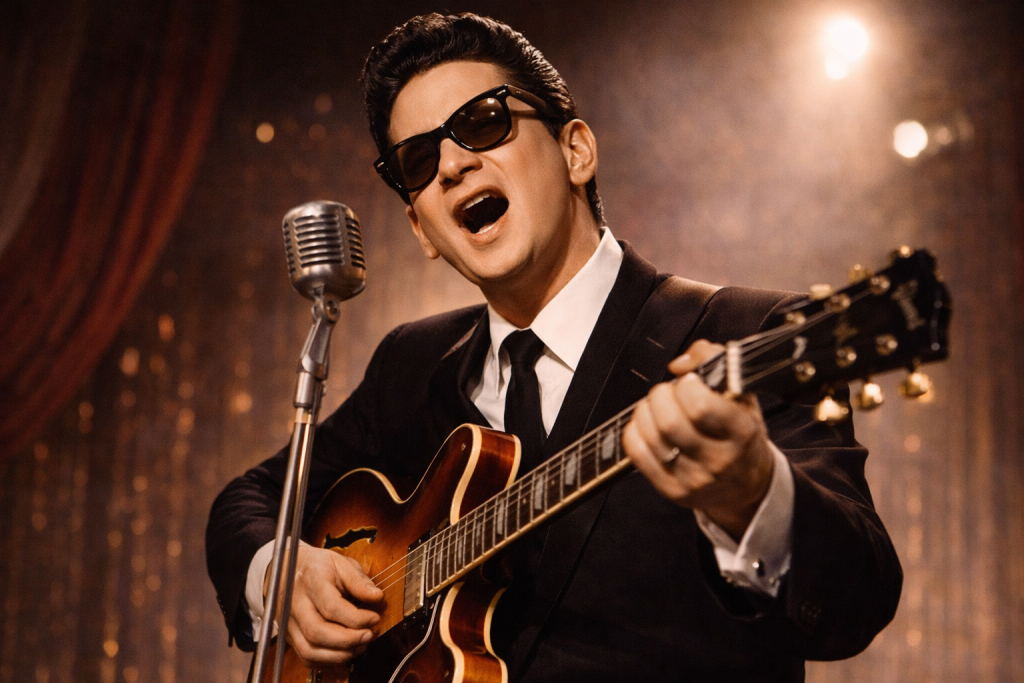
“Only the Lonely” announced a sound all his own
Some artists spend years finding the song that reveals who they really are. For Roy Orbison, “Only the Lonely” was one of those defining moments. It was not simply a hit. It was a statement of identity.
The song made clear that Orbison was not trying to compete with louder or flashier performers. He was building something more inward and more intense. The title alone tells you much of what you need to know about his artistic world. This was music centered not on youthful rebellion, but on emotional isolation.
That shift mattered. It gave listeners a different kind of male voice in popular music, one willing to sound wounded and sincere without apology. In that sense, Roy Orbison expanded what emotional masculinity could sound like on the radio. A very different kind of American music legend.
He made heartbreak sound cinematic
There is something cinematic about Roy Orbison’s best recordings. They do not unfold like casual pop songs. They feel staged, almost like miniature emotional dramas. The arrangement grows. The tension builds. The voice reaches for something just beyond ordinary conversation.
That quality helped set him apart from many of his contemporaries. While some singers specialized in immediacy and charm, Orbison often gave listeners atmosphere. His songs created a mood so fully that they seemed to contain their own weather.
This is especially true in recordings like “Crying” and “It’s Over,” where the sadness is not presented as a passing moment, but as a whole emotional landscape. For older listeners, this remains part of the appeal. His music does not merely revisit heartbreak. It gives heartbreak form, color, and scale.
He looked restrained, but his records were fearless
Roy Orbison’s public image could seem quiet, even formal, especially compared with the kinetic energy of other early stars. But his records were remarkably bold. He took emotional risks that many others avoided. He allowed songs to be vulnerable, grand, and openly sorrowful at a time when much popular music still rewarded simplicity and cool detachment.
That artistic courage is easy to miss if someone focuses only on the surface. Orbison did not look like a dramatic revolutionary. Yet musically, he pushed against expectations. He made room for melancholy in a form often associated with fun, flirtation, and youthful momentum.
That is one reason his legacy has aged so well. He did not depend on fashion. He depended on emotional truth.
Why “Oh, Pretty Woman” never tells the full story
For many casual listeners, Roy Orbison is immediately associated with “Oh, Pretty Woman.” It is understandable. The song is famous, catchy, and instantly recognizable. But it can also hide the fuller range of what made him special.
If someone knows only that one recording, they may miss the loneliness, vulnerability, and dramatic sophistication that define much of his best work. “Oh, Pretty Woman” shows his commercial power, but not the complete emotional world he created across his catalog.
That is why Roy Orbison is such a strong subject for Music Legends. He was not just an artist with one massive hit. He was a singer with a rare emotional identity, and that identity is what continues to reward listeners who go deeper than the obvious entry point. The golden age of classic heartbreak songs.
Older American listeners still hear something deeply human in him
Roy Orbison continues to resonate with older audiences because his music never feels rushed or disposable. Even his best-known recordings carry emotional weight. They invite listening rather than skimming. They ask the audience to sit with feeling rather than move past it.
That quality matters more with age. Many older listeners return not just to melody, but to sincerity. Orbison gives them that in abundance. He sings as though the song matters, as though the feeling has consequences, as though heartbreak deserves real attention.
He also belongs to a generation of performers whose voices were central to their identity. There were no elaborate tricks needed to create impact. The emotional force was already there in the performance itself. That is one reason his records still sound alive.
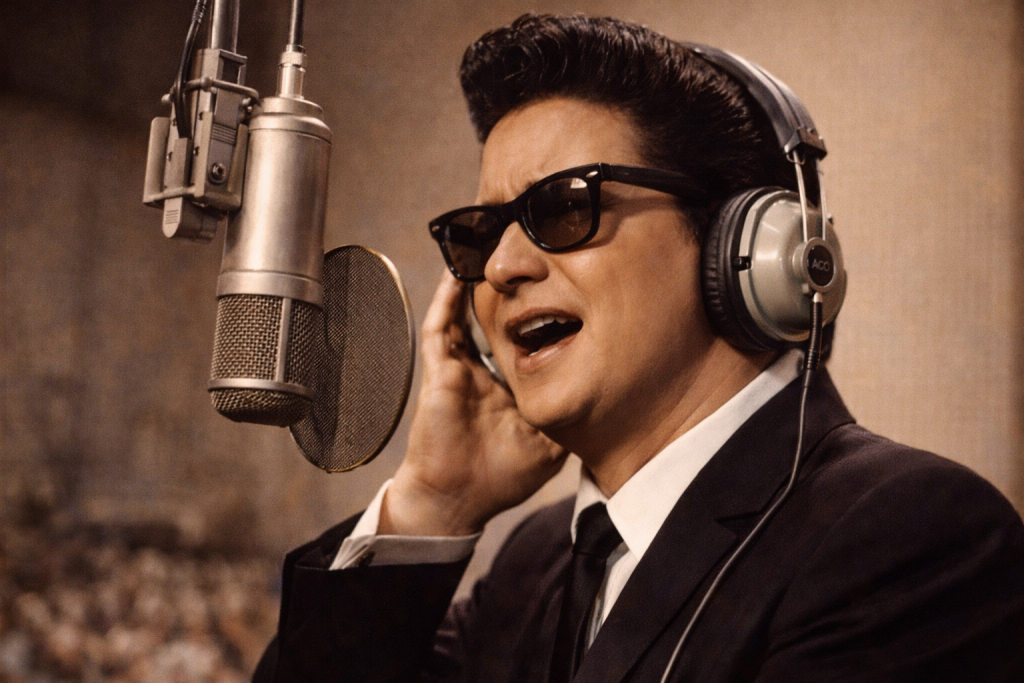
His music still reaches listeners who have outgrown noise
A lot of popular music depends on youthful energy. Roy Orbison’s music depends on emotional depth. That distinction helps explain why his work remains meaningful to people who have lived long enough to recognize the difference between loud feeling and real feeling.
Older listeners often hear in Orbison something that younger audiences may only discover later: sadness can be beautiful, restraint can be powerful, and a voice does not have to shout in order to leave a permanent mark. His songs understand longing in a way that still feels mature and honest.
Roy Orbison became a legend by trusting the ache in his songs
Roy Orbison did not become immortal by trying to be the loudest man in the room. He became immortal by trusting sadness, trusting drama, and trusting that listeners would follow him into emotional places many pop singers avoided.
That is why he still matters. His recordings offer more than nostalgia. They offer recognition. They remind listeners that loneliness has its own music, and that vulnerability can be every bit as powerful as swagger.
For a Music Legends category aimed at readers who still value timeless voices, Roy Orbison fits naturally. He stands for a kind of artistry that does not fade once trends pass. The songs remain. The ache remains. And so does the voice. Timeless voices that still speak across generations.